
Healthy Vegetarian Stuffed Peppers Recipe Made Simple: A Complete Guide
Table of Contents
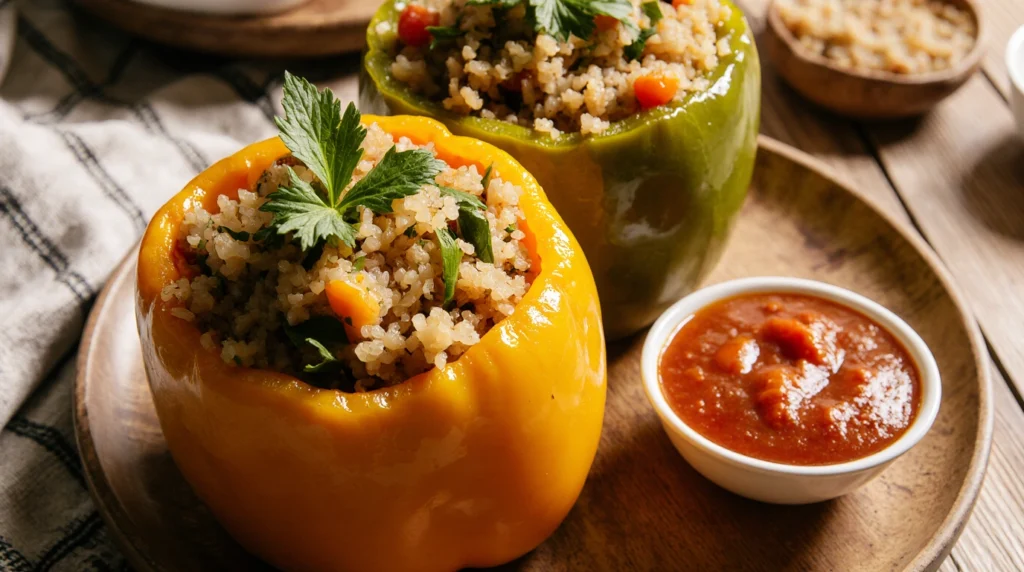
If you’ve ever wanted a meal that is vibrant, nourishing, and satisfying, then a stuffed peppers recipe is exactly what you need. You know that feeling when you prepare a meal, and the aroma fills your kitchen while everyone gathers around the table, eager for that first bite? That’s the magic of stuffed peppers. Beyond their visual appeal, they’re versatile, packed with nutrients, and surprisingly simple to prepare. Whether you’re a busy professional, a health-conscious parent, or someone exploring vegetarian meals, this guide will show you how to make healthy vegetarian stuffed peppers that are both hearty and delightful.
Why Choose Vegetarian Stuffed Peppers?
Nutritional Benefits
You may already know that bell peppers are naturally colorful and visually appealing, but they’re also nutritional powerhouses. Each pepper contains high levels of:
- Vitamin C – Supports your immune system and skin health.
- Vitamin A – Promotes eye health.
- Fiber – Keeps you full and aids digestion.
- Antioxidants – Helps combat inflammation and supports overall wellness.
Pairing bell peppers with grains, beans, and fresh vegetables creates a balanced meal that’s satisfying without being heavy. A single serving provides essential nutrients and keeps your energy steady throughout the day.
Perfect for Various Diets
You’ll find that this recipe is adaptable to multiple dietary preferences. It’s naturally gluten-free and plant-based, making it suitable for vegetarians, vegans, and even those who are trying to limit meat. By choosing plant-based protein sources like quinoa, lentils, or beans, you’re ensuring a wholesome, nutrient-rich dish that everyone can enjoy.
Quick Benefits at a Glance
- Supports weight management with high-fiber content.
- Promotes heart health with low saturated fat.
- Easy to customize based on personal taste or seasonal produce.
Ingredients You’ll Need
When making a healthy vegetarian stuffed peppers recipe, using fresh, high-quality ingredients is essential. Each component contributes to flavor, texture, and nutrition, so gathering everything before you start ensures a smooth cooking experience. Here’s a detailed breakdown of what you’ll need, along with tips and optional swaps.
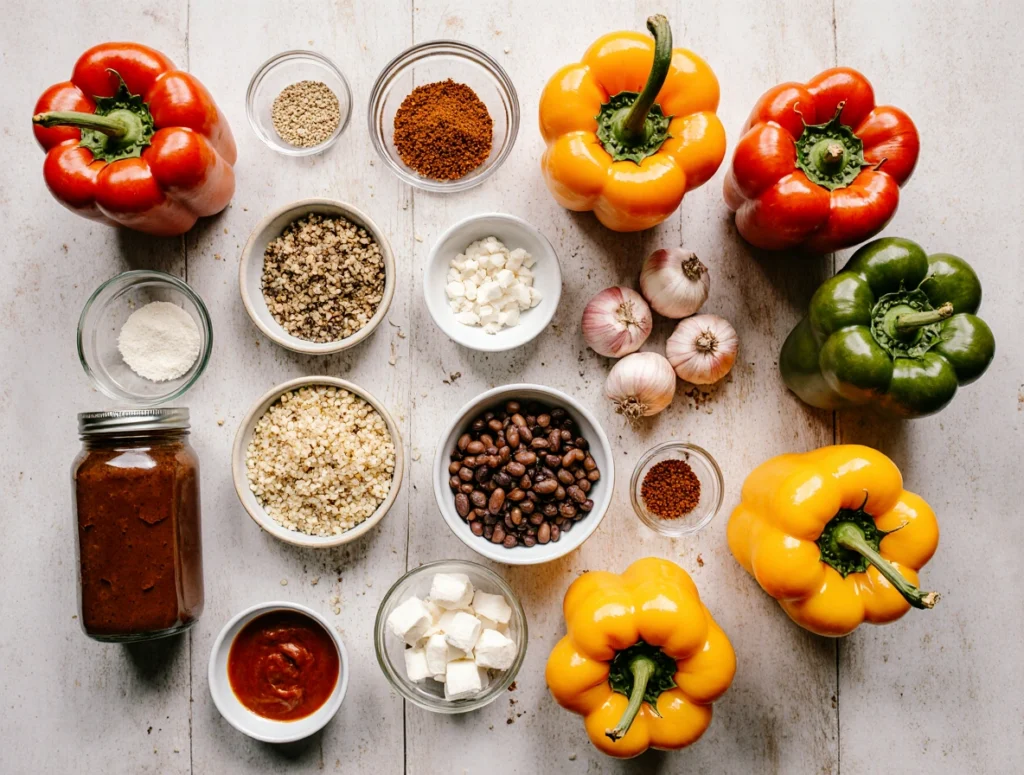

Main Ingredients Table
| Ingredient | Quantity | Notes & Tips |
|---|---|---|
| Bell peppers (red, yellow, green) | 4 large | Choose firm, vibrant peppers. Each color offers unique nutrients: red for vitamin A, yellow for vitamin C, green for antioxidants. |
| Quinoa or rice | 1 cup | Cooked. Quinoa adds protein and a nutty flavor; rice provides a softer, classic texture. |
| Black beans | 1 can | Drained and rinsed. You can also use kidney beans or chickpeas for variety. |
| Onion | 1 medium | Finely chopped. Adds natural sweetness and depth of flavor when sautéed. |
| Garlic | 2 cloves | Minced. Enhances aroma and boosts immune benefits. |
| Tomato sauce | 1 cup | Low-sodium recommended. Provides moisture and rich umami taste. |
| Olive oil | 1 tbsp | Extra virgin. Used for sautéing vegetables and adding healthy fats. |
| Spices | To taste | Paprika, cumin, salt, pepper. Customize based on your flavor preference. |
| Cheese (optional) | ½ cup | Use shredded cheese or vegan alternatives. Adds creaminess and a golden finish when baked. |
Ingredient Highlights and Tips
- Bell Peppers: Opt for peppers that are firm and have no soft spots. Red and yellow peppers are sweeter, while green peppers offer a slightly bitter, earthy flavor. Choosing a mix of colors not only enhances taste but also makes your dish visually appealing for photos or serving guests.
- Grains: Quinoa is a complete protein and works well for vegetarian meals, while rice is a classic filler that absorbs flavors beautifully. You can also experiment with farro, couscous, or bulgur.
- Beans: Beans are essential for protein and fiber, making the dish satisfying. Rinsing canned beans reduces sodium content and improves taste.
- Spices & Herbs: Don’t underestimate the power of spices. Paprika adds smokiness, cumin brings warmth, and a pinch of chili flakes can give a subtle kick. Fresh herbs like parsley, basil, or cilantro can be added after baking for a fresh aroma.
- Cheese Options: For a vegan-friendly option, use plant-based cheese or nutritional yeast for a cheesy flavor without dairy.
Optional Additions for Extra Flavor & Nutrition
- Vegetables: Corn, zucchini, mushrooms, spinach, or carrots can be added to the filling for more variety and color.
- Nuts & Seeds: Toasted pine nuts, pumpkin seeds, or sunflower seeds provide crunch and healthy fats.
- Sauces: A dollop of pesto, hot sauce, or tahini can be added before serving to enhance flavor complexity.
Pro Tip: Before starting the recipe, measure and prep all ingredients. Chopping onions, mincing garlic, and cooking quinoa in advance makes the stuffing process faster and ensures even cooking of the peppers. This also improves the consistency and taste of your stuffed peppers recipe.
Step-by-Step Vegetarian Stuffed Peppers Recipe
Creating a healthy vegetarian stuffed peppers recipe is easier than it looks. By following these detailed steps, you’ll have perfectly tender, flavorful peppers every time. Each step includes practical tips to help you avoid common pitfalls and ensure the best results.
Step 1: Prepare the Peppers
- Wash your bell peppers thoroughly under running water.
- Slice off the tops and remove seeds and membranes carefully. This ensures a hollow cavity for the filling.
- Optional: Blanch peppers in boiling water for 2–3 minutes if you prefer softer peppers. This reduces baking time and gives a more tender texture.
- Pat the peppers dry and set them aside.
Pro Tip: Keep the tops for presentation or chop them finely to add back into the filling for extra flavor.

Step 2: Prepare the Filling
- Heat 1 tablespoon of olive oil in a medium pan over medium heat.
- Add finely chopped onions and sauté until translucent and fragrant (about 3–4 minutes).
- Add minced garlic and cook for another 30–60 seconds. Avoid burning, as garlic can become bitter.
- In a large mixing bowl, combine:
- Cooked quinoa or rice
- Rinsed black beans
- Sautéed onions and garlic
- 1 cup tomato sauce
- Spices: paprika, cumin, salt, and pepper
- Mix thoroughly to ensure all ingredients are evenly combined.
Flavor Hack: Add a splash of soy sauce or a pinch of smoked paprika for deeper umami flavor. Fresh herbs like parsley, cilantro, or basil can also be mixed in for extra aroma.
Step 3: Stuff the Peppers
- Spoon the filling evenly into each bell pepper, leaving a little space at the top to allow expansion during baking.
- Optional: Sprinkle shredded cheese or plant-based cheese on top for a golden, melty finish.
Pro Tip: Overstuffing can cause the filling to spill out while baking. Use a small spoon or ice cream scoop for neat, uniform portions.
Step 4: Bake the Stuffed Peppers
- Preheat your oven to 375°F (190°C).
- Arrange the stuffed peppers in a baking dish, standing upright.
- Cover the dish with foil to lock in moisture and bake for 25 minutes.
- Remove the foil and bake for an additional 5–10 minutes until the peppers are tender and the cheese (if used) is lightly browned.
Quick Tips:
- For extra flavor, drizzle a teaspoon of olive oil over the peppers before baking.
- If you like slightly caramelized edges, broil for 1–2 minutes after baking.
Step 5: Serve and Enjoy
- Let the peppers cool slightly before serving to allow the filling to set.
- Serve as a main dish with a side salad, crusty bread, or roasted vegetables.
- Garnish with fresh herbs for a professional touch.
Optional Additions:
- Add a dollop of Greek yogurt or vegan sour cream for creaminess.
- Top with crushed nuts or seeds for a crunchy contrast.
- Pair with a light vinaigrette or lemon wedge to enhance flavors.
Tips for Perfect Vegetarian Stuffed Peppers Every Time
- Uniform Size: Choose peppers that are roughly the same size for even baking.
- Moisture Balance: Avoid overly wet fillings; excess liquid can make peppers soggy.
- Flavor Layering: Sautéing aromatics (onion, garlic) before mixing into the filling enhances depth of flavor.
- Meal Prep Friendly: You can prepare the filling ahead of time and stuff the peppers just before baking for convenience.
By following these steps, you’ll create stuffed peppers that are not only visually stunning but also packed with flavor and nutrition. This vegetarian stuffed peppers recipe is versatile enough to suit your taste preferences while keeping it wholesome and satisfying.
Variations & Customizations

One of the best things about a stuffed peppers recipe is its versatility. You can tweak flavors, swap ingredients, and incorporate seasonal produce to make each batch unique. Whether you’re looking to add protein, spice things up, or make it kid-friendly, there’s a variation for you.
1. Protein Alternatives
Even though the classic recipe uses quinoa and beans, you can experiment with other plant-based proteins:
- Lentils: Red or green lentils add a hearty texture and earthy flavor.
- Chickpeas: Mashed or whole, chickpeas provide creaminess and extra protein.
- Tofu or Tempeh: Crumbled tofu or tempeh absorbs the flavors of spices and tomato sauce beautifully.
- Mixed Grains: Combine quinoa with farro or brown rice for added texture and nutrition.
Pro Tip: If using tofu, lightly pan-fry or season before mixing it into the filling to enhance flavor.
2. Spice & Flavor Tweaks
Spices and herbs can completely transform your stuffed peppers into a global culinary experience:
- Smoky: Add smoked paprika and a touch of cumin for a Spanish or Mexican twist.
- Spicy: Include chili flakes, cayenne pepper, or a dash of hot sauce for heat.
- Herbal: Fresh herbs like basil, parsley, oregano, or cilantro added at the end brighten the flavors.
- Savory: Mix in sun-dried tomatoes, olives, or roasted garlic for a Mediterranean flair.
Tip: Layer flavors in stages—sauté aromatics first, season the filling, and finish with fresh herbs after baking. This ensures depth and freshness.
3. Seasonal Vegetable Additions

Using seasonal vegetables not only adds nutrition but also makes your dish more colorful and visually appealing:
- Summer: Corn, zucchini, eggplant, cherry tomatoes.
- Fall: Mushrooms, kale, roasted butternut squash.
- Winter: Spinach, carrots, parsnips.
- Optional Crunch: Add chopped bell pepper tops or water chestnuts to the filling for texture.
Pro Tip: Lightly sauté harder vegetables (like carrots or zucchini) before adding to the filling so they cook evenly inside the peppers.
4. Cheese & Topping Options
Cheese enhances creaminess and adds a golden crust, but there are many options:
- Vegan Cheese: Nutritional yeast, vegan mozzarella, or cashew cheese for a dairy-free alternative.
- Classic Cheese: Cheddar, Monterey Jack, or mozzarella for a melty topping.
- Crunchy Toppings: Toasted breadcrumbs, crushed nuts, or seeds add texture and visual appeal.
- Sauce Enhancements: Drizzle tomato sauce, pesto, tahini, or a light vinaigrette on top before serving.
Tip: For a golden cheese topping, bake uncovered during the last 5–10 minutes and broil briefly if desired.
5. Creative Twists
- Mediterranean Style: Mix quinoa with olives, sun-dried tomatoes, and feta (or vegan feta).
- Mexican Style: Add black beans, corn, chili powder, and a sprinkle of cilantro.
- Asian Inspired: Use cooked brown rice, tofu, soy sauce, ginger, and sesame seeds.
- Breakfast Style: Mix cooked quinoa with scrambled eggs or tofu scramble, add spinach and mushrooms, and top with a sprinkle of cheese.
Pro Tip: Experiment with sauces—like salsa, curry, or tahini—to completely change the flavor profile without changing the cooking method.
Why Customization Matters

Giving yourself flexibility in this vegetarian stuffed peppers recipe allows you to:
- Tailor the dish to dietary needs (vegan, high-protein, low-carb).
- Use up leftover ingredients creatively, reducing waste.
- Keep your meals exciting and prevent flavor fatigue.
- Cater to your family or guests with different preferences.
By incorporating these variations and customizations, you can transform a classic vegetarian stuffed pepper into a unique and personal dish each time. Not only does this keep the recipe fresh, but it also allows you to explore global flavors, seasonal produce, and diverse textures—making each meal a new experience.
Meal Prep & Storage Tips
One of the best things about a vegetarian stuffed peppers recipe is its convenience. Not only can you enjoy it fresh from the oven, but it also works beautifully for meal prep, weekly planning, and make-ahead dinners. By following these tips, you can save time, reduce waste, and ensure your stuffed peppers taste fresh every time.
1. Make-Ahead Preparation
- Prepare the Filling in Advance: You can cook the grains, sauté the vegetables, and mix the filling up to 1–2 days ahead. Store in an airtight container in the fridge.
- Pre-Cut Peppers: Wash, cut, and deseed the bell peppers ahead of time. Keep them in a separate airtight container to maintain freshness.
- Assemble Before Baking: For busy weekdays, stuff the peppers the night before and refrigerate until ready to bake. Cover with foil to prevent drying out.
Pro Tip: Label containers with the date to keep track of freshness and rotate ingredients efficiently.
2. Refrigeration Tips
- Store cooked stuffed peppers in airtight containers in the refrigerator for up to 3 days.
- To maintain texture, avoid stacking peppers directly on top of each other. Instead, use a shallow container or line with parchment paper.
- Reheat individual portions in the oven or microwave to retain flavor and tenderness.
Quick Reheat Tip: Bake at 350°F (175°C) for 10–12 minutes or microwave on medium power for 2–3 minutes. Adding a teaspoon of water or tomato sauce can prevent drying out.
3. Freezing for Long-Term Storage
- Freeze Individual Peppers: Wrap each stuffed pepper tightly in plastic wrap or foil, then place in a freezer-safe bag.
- Freeze in Baking Dish: Assemble stuffed peppers in a baking dish, cover tightly with foil, and freeze. This allows you to bake directly from frozen with an extended cooking time.
- Storage Duration: Properly wrapped stuffed peppers can last up to 1 month in the freezer without significant loss of flavor or texture.
Pro Tip: Thaw frozen peppers in the refrigerator overnight before reheating for more even warming.
4. Batch Cooking & Weekly Meal Prep
- Prepare a large batch of stuffed peppers to enjoy throughout the week.
- Serve them with simple sides like salads, roasted vegetables, or grains for a complete meal.
- Use leftover filling creatively in wraps, salads, or as a topping for baked potatoes.
Time-Saving Tip: Double the filling recipe and store extra in the fridge or freezer for quick lunches or dinners later in the week.
5. Maintaining Flavor & Texture
- Avoid soggy peppers: Do not overcook when initially baking; peppers should be tender but still firm.
- Flavor retention: Add fresh herbs or a drizzle of olive oil after reheating to revive taste and aroma.
- Cheese: If using cheese toppings, sprinkle a little extra before reheating to restore creaminess and golden color.
By implementing these meal prep and storage tips, you can enjoy your vegetarian stuffed peppers recipe anytime without sacrificing flavor, texture, or nutrition. This makes it perfect for busy weekdays, meal planning, or batch cooking, ensuring you always have a wholesome, delicious meal ready to go

Frequently Asked Questions (FAQ)
Q: Can I make this recipe vegan?
A: Absolutely! Simply use plant-based cheese or skip cheese altogether. The dish remains hearty and flavorful.
Q: How long do stuffed peppers last in the fridge?
A: Store in an airtight container for up to 3 days. For longer storage, freeze individual peppers.
Q: Can I use grains other than quinoa?
A: Yes, rice, couscous, bulgur, or farro work beautifully. Just adjust cooking times accordingly.
Q: How can I make stuffed peppers spicier?
A: Add chili flakes, cayenne, or a dash of hot sauce to the filling. Taste as you go to balance heat.
Q: Can I prep this recipe ahead of time?
A: Definitely. Prepare the filling in advance and stuff the peppers just before baking. This saves time without sacrificing flavor.
Conclusion
You now have everything you need to make a healthy vegetarian stuffed peppers recipe that’s colorful, flavorful, and satisfying. By following these steps, you can create a meal that looks amazing, nourishes your body, and delights your taste buds.
Remember, the key to the perfect stuffed peppers lies in quality ingredients, balanced flavors, and thoughtful cooking. Feel free to experiment with grains, spices, and vegetables to make this recipe your own.
Now it’s your turn—grab some fresh bell peppers, gather your ingredients, and start creating this wholesome, hearty meal today. Share your version with friends and family, and enjoy the smiles that follow every bite.
Call-to-Action:
Try this recipe this week and tell us how you customized it! Share your photos and variations in the comments to inspire others who want to enjoy stuffed peppers recipe done the healthy vegetarian way.