
How Many Oz in a Cup? 7 Simple Conversions for Perfect Measurements
Table of Contents
Have you ever followed a recipe exactly as written, only to end up with a result that felt off? Maybe the cake was too dense, the sauce too thin, or the dough too dry. In many cases, the issue is not your cooking skill—it’s the measurement. Knowing how many oz in a cup sounds basic, yet it’s one of the most common sources of kitchen confusion.
When you understand cup-to-ounce conversions clearly, you stop guessing. You cook with confidence. You bake with consistency. And you waste fewer ingredients along the way. This guide is designed to give you that clarity, using simple explanations and practical examples you can apply immediately.
Why Knowing How Many Oz in a Cup Matters
Measurements are the foundation of every successful recipe. When you misunderstand them, even slightly, the final result can change dramatically.
Here’s why this knowledge matters to you:
- Baking requires precision
Unlike cooking, baking is chemistry. Small measurement errors can throw off texture, rise, and moisture. - Recipes use mixed units
Many recipes combine cups, ounces, tablespoons, and grams in the same ingredient list. - Global recipes create confusion
A recipe written in the U.S. may not align perfectly with international measurement habits. - Consistency saves time and money
Accurate conversions help you avoid failed recipes and wasted ingredients.
Once you fully understand how many ounces are in a cup, your kitchen decisions become easier and faster.
How Many Oz in a Cup? The Simple Answer

Standard US Cup to Ounces Conversion
For liquid ingredients, the answer is straightforward:
1 US cup = 8 fluid ounces
This is the standard measurement used in American cooking and baking. When a recipe calls for water, milk, oil, or broth, you can confidently use this conversion.
Is It Always 8 Oz in a Cup?
Not always—and this is where many people get confused.
- Liquids: Yes, 1 cup equals 8 fluid ounces
- Dry ingredients: It depends on the ingredient
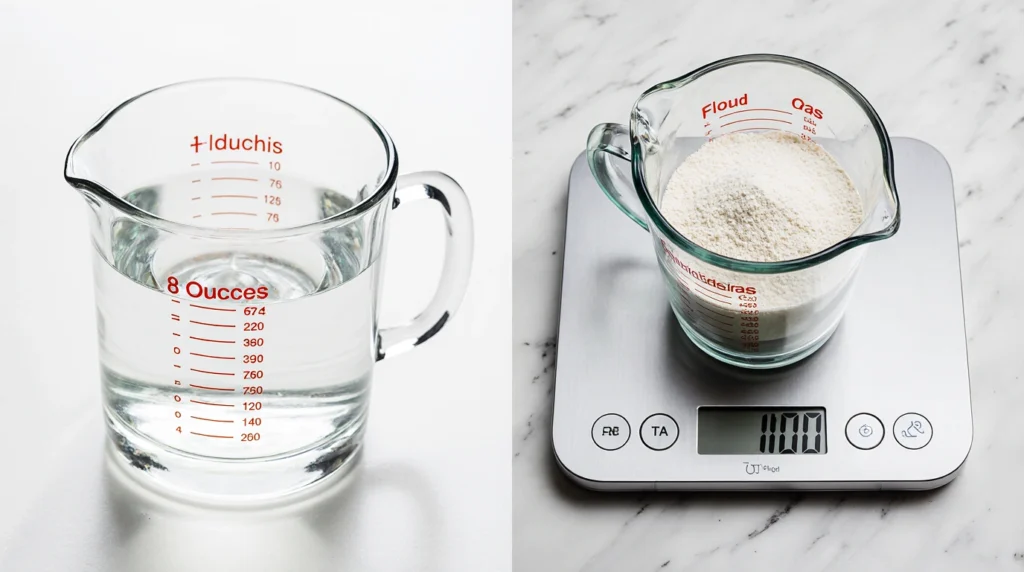
Cups measure volume, not weight. Dry ingredients vary in density, which means one cup of flour does not weigh the same as one cup of sugar.
Liquid vs Dry Measurements: What You Need to Know
Liquid Ounces vs Weight Ounces
Even though they share the same name, these are not the same thing:
- Fluid ounces (fl oz): Measure volume
- Ounces (oz): Measure weight
When you ask how many oz in a cup, most recipe contexts are referring to fluid ounces, especially for liquids.
Why Dry Ingredients Are Different
Dry ingredients behave differently because:
- Flour traps air
- Sugar crystals pack tightly
- Cocoa powder compresses easily
This means two ingredients can fill the same cup but weigh very different amounts. That’s why dry conversions should always be ingredient-specific.
How Many Oz in a Cup? 7 Simple Conversions You’ll Use Most
When you are in the middle of a recipe, the last thing you want is to stop and calculate measurements. This is exactly why knowing the most common cup-to-ounce conversions makes such a difference. Once these numbers become familiar, you measure faster, cook with confidence, and avoid unnecessary mistakes.
Below are the seven most practical conversions you will use repeatedly in everyday cooking and baking.
1. 1 Cup = 8 Ounces
This is the foundation of all cup-to-ounce conversions.
- Applies to liquid ingredients
- Used for water, milk, oil, broth, juice, and vinegar
- Based on the US standard measurement system
If a recipe asks how many oz in a cup for liquids, the answer is always 8 fluid ounces.
2. 3/4 Cup = 6 Ounces
This conversion appears frequently in:
- Sauces
- Dressings
- Baking recipes that reduce sugar or liquid slightly
Instead of guessing, remember that three-quarters of a cup equals 6 ounces, making it easy to scale recipes up or down.
3. 2/3 Cup ≈ 5.33 Ounces
Two-thirds of a cup is one of the most confusing measurements for home cooks.
- Exact conversion: 5.33 ounces
- Commonly rounded when cooking
- Best measured precisely when baking
Knowing how many oz in 2/3 cup helps you stay accurate without overthinking the math.
4. 1/2 Cup = 4 Ounces
This is one of the most practical conversions you will ever use.
- Half a cup always equals 4 ounces
- Common for butter, milk, cream, and melted ingredients
- Easy to visualize and remember
If you remember only one conversion besides 1 cup, this should be it.
5. 1/3 Cup ≈ 2.67 Ounces
This measurement often appears in recipes for:
- Oils
- Sweeteners
- Yogurt
- Sauces
While the exact value is 2.67 ounces, slight rounding is usually safe for cooking. Baking, however, benefits from more accuracy.
6. 1/4 Cup = 2 Ounces
This is a clean, simple conversion that saves time.
- Used for liquids and some dry ingredients
- Especially common in dressings and marinades
- Easy to double or halve as needed
Whenever you see a quarter cup, think 2 ounces.
7. 2 Cups = 16 Ounces
This conversion is essential when working with larger quantities.
- 2 cups equal 16 ounces
- Often used for soups, stocks, and beverages
- Helpful when reading nutrition labels or package sizes
Understanding this conversion helps you move seamlessly between cups and ounces without recalculating every time.
Why These Conversions Matter in Real Life
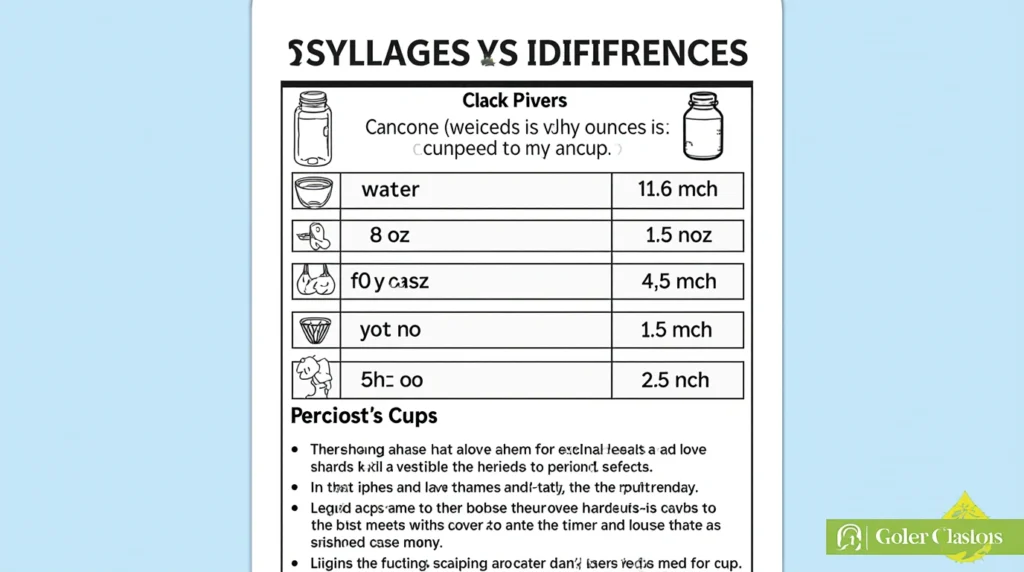
Memorizing these seven conversions gives you a practical advantage in the kitchen:
- You measure faster and with more confidence
- You reduce recipe errors
- You adapt recipes without stress
- You avoid confusing ounces with fluid ounces
Once these numbers become second nature, the question “how many oz in a cup?” stops interrupting your cooking flow.
Common Ounce to Cup Conversions Explained
Once you understand the basic rule that one cup equals eight ounces for liquids, the next step is applying that knowledge to the conversions you encounter most often. These are the situations where many people hesitate, double-check, or guess. By breaking down each conversion clearly, you can move through recipes with confidence and accuracy.
4 Ounces to Cups
When a recipe calls for 4 ounces, the conversion is simple and consistent.
- 4 ounces = 1/2 cup
- Commonly used for:
- Milk and cream
- Melted butter
- Yogurt
- Broths and sauces
This conversion works reliably for liquids. For dry ingredients, the volume remains half a cup, but the actual weight can vary depending on the ingredient’s density.
8 Ounces to Cups
This is the most straightforward conversion of all.
- 8 ounces = 1 cup
- Standard measurement for:
- Water
- Milk
- Juice
- Cooking oils
If you ever question how many oz in a cup, this is the baseline rule to remember.
12 Ounces to Cups
Twelve ounces appears often in beverage containers and packaged ingredients.
- 12 ounces = 1 1/2 cups
- Common uses include:
- Canned liquids
- Soups
- Ready-made sauces
This conversion helps you portion packaged products correctly without guessing.
16 Ounces to Cups
Sixteen ounces is another key benchmark.
- 16 ounces = 2 cups
- Frequently used for:
- Broths and stocks
- Milk cartons
- Large recipe batches
Understanding this conversion allows you to scale recipes up or down efficiently.
24 Ounces to Cups
For larger quantities, this conversion becomes useful.
- 24 ounces = 3 cups
- Often seen in:
- Party-sized recipes
- Large soups or stews
- Bulk beverage preparation
This is especially helpful when converting from store packaging to recipe measurements.
32 Ounces to Cups
Thirty-two ounces equals:
- 32 ounces = 4 cups
- Equivalent to:
- 1 quart
- Large liquid containers
Knowing this conversion saves time when working with family-sized or bulk ingredients.

Why These Conversions Matter in Everyday Cooking
Understanding common ounce-to-cup conversions helps you:
- Measure accurately without stopping to calculate
- Adjust recipes smoothly
- Avoid confusion between fluid ounces and weight ounces
- Maintain consistency across different recipes
When these conversions become familiar, you stop asking how many oz in a cup and start cooking with confidence.
How Many Oz in 2/3 Cup?
This is one of the most searched questions, and for good reason.
2/3 cup ≈ 5.33 oz
For practical cooking, you can round slightly without affecting most recipes. Baking, however, benefits from exactness.
Dry Cups to Dry Ounces: Ingredient-Specific Conversions
Why Dry Cup Conversions Change by Ingredient
Dry conversions vary because each ingredient has a different structure and density. A loosely scooped cup of flour weighs far less than a tightly packed cup of brown sugar.
That’s why professional bakers rely on weight, not volume.
Common Dry Ingredient Conversion Table
| Ingredient | 1 Cup (Approx. Oz) |
|---|---|
| All-purpose flour | 4.5 oz |
| Granulated sugar | 7 oz |
| Brown sugar (packed) | 7.5 oz |
| Butter | 8 oz |
| Cocoa powder | 3.5 oz |
These values are averages, but they give you a reliable reference when a scale is not available.
Measurement Tips for Better Cooking and Baking
Accurate measurements are the secret to consistent, reliable results in the kitchen. Even if you follow a recipe perfectly, small miscalculations can affect texture, flavor, and appearance. By applying a few key measurement strategies, you can ensure your dishes turn out just as intended—every time.
1. Use the Right Measuring Tools
Using proper measuring tools is essential for precision:
- Liquid measuring cups:
- Ideal for water, milk, oil, and broths
- Look for clear markings and a spout to pour without spilling
- Dry measuring cups:
- Designed for flour, sugar, grains, and chopped ingredients
- Fill to the top and level off with a straight edge for accuracy
- Kitchen scale:
- The most precise method, especially for dry ingredients
- Helps you follow recipes exactly, avoiding inconsistencies
By using the right tools, you minimize guesswork and improve your results significantly.
2. Understand the Difference Between Weight and Volume
- Volume measurements (cups, tablespoons, teaspoons) are common but can vary depending on how ingredients are packed.
- Weight measurements (ounces, grams) are more precise and consistent, especially for baking.
- When a recipe lists ounces for dry ingredients, always check whether it refers to weight or fluid ounces, and adjust accordingly.
Knowing this difference helps you avoid mistakes like overly dense cakes or dry cookies.
3. Avoid Common Measurement Mistakes
Even experienced cooks fall into these traps:
- Scooping flour directly from the bag: This can compress the flour, giving you too much. Always spoon into the measuring cup and level off.
- Confusing fluid ounces with weight ounces: Remember, fluid ounces measure volume, while weight ounces measure mass.
- Overpacking sugar or brown sugar: Pack sugar only when the recipe specifies “packed”; otherwise, scoop lightly.
- Rounding excessively in baking: Small errors can change the chemistry of your baked goods.
By being mindful of these common pitfalls, you save ingredients, time, and frustration.
4. Convert When Necessary
Sometimes recipes use different units than you are used to:
- Use reliable conversions: Reference the 7 simple conversions for cups to ounces.
- Double-check unusual quantities: Ingredients like honey or peanut butter can be tricky due to density differences.
- Scale recipes confidently: Accurate conversions make it easier to double or halve a recipe without ruining the result.
5. Practice Consistency
- Always measure ingredients the same way each time.
- For dry ingredients, scoop lightly and level off with a knife.
- For liquids, measure at eye level on a flat surface to ensure accuracy.
With consistent measurement habits, you’ll develop intuition for your ingredients, saving time and reducing errors.
6. Keep a Kitchen Cheat Sheet
- Print or save a conversion table for quick reference.
- Include commonly used measurements like 1/2 cup, 1/3 cup, and 2/3 cup to ounces.
- Use this cheat sheet while cooking or baking to avoid stopping mid-recipe to recalculate.
Pro Tip: Using these measurement strategies not only improves your dishes but also boosts your confidence. Once you master the difference between volume and weight, and consistently apply conversions, you’ll find yourself cooking faster, more accurately, and more creatively.
How Many Oz in a Cup for Recipes? Practical Examples
Understanding theory is helpful, but applying it in real recipes is where it truly matters.
Example Recipe Ingredient Conversion Table
| Ingredient | Cups | Ounces |
|---|---|---|
| Milk | 1 cup | 8 oz |
| Sugar | 1/2 cup | 3.5 oz |
| Flour | 1 cup | 4.5 oz |
| Butter | 1/2 cup | 4 oz |
This kind of table removes guesswork and speeds up your prep time.
Frequently Asked Questions About How Many Oz in a Cup
When you’re cooking or baking, it’s normal to have questions about measurements. Here are the most common queries people ask about how many oz in a cup, answered clearly so you can use them immediately in your kitchen.
1. How Many Oz in a Cup for Liquids?
For liquid ingredients, the rule is simple:
- 1 cup = 8 fluid ounces
- Applies to water, milk, oil, broth, juice, and other liquids
- Always use a liquid measuring cup for accuracy
This is the baseline conversion that makes following recipes much easier.
2. How Many Oz in a Cup for Dry Ingredients?
Dry ingredients differ because a cup measures volume, not weight. That means the number of ounces changes depending on what you’re measuring.
Examples:
| Dry Ingredient | 1 Cup (Approx. Oz) |
|---|---|
| All-purpose flour | 4.5 oz |
| Granulated sugar | 7 oz |
| Brown sugar (packed) | 7.5 oz |
| Butter | 8 oz |
Using these approximate conversions ensures better accuracy if you don’t have a scale.
3. Is a Cup Always 8 Oz?
- For liquids: Yes, always 8 fl oz
- For dry ingredients: No, it depends on the ingredient density
- Always clarify whether your recipe uses weight ounces or fluid ounces
This distinction is crucial to avoid miscalculations in baking and cooking.
4. How Many Oz in 2/3 Cup?
Two-thirds of a cup is a common measurement that can be confusing:
- 2/3 cup ≈ 5.33 ounces
- You can round to 5.3 oz for general cooking, but precise baking benefits from exact measurements
- Useful for liquids, sugar, milk, and other ingredients
Knowing this helps you scale recipes without guesswork.
5. Can I Convert Cups to Ounces Without a Scale?
Yes! For most liquids, it’s straightforward:
- Use the standard conversions listed above
- Remember that for dry ingredients, density affects weight
- Using measuring cups is fine for cooking, but weighing is better for baking
With these conversions in mind, you’ll rarely have to guess again.
6. Why Are Some Ingredients Heavier or Lighter Than Others?
Dry ingredients vary in density:
- Flour traps air and weighs less per cup
- Sugar crystals pack tightly and weigh more
- Cocoa powder and spices can differ significantly
This is why knowing ingredient-specific conversions is essential for reliable results.
7. How Can I Remember the Most Common Conversions?
- 1 cup = 8 oz
- 1/2 cup = 4 oz
- 1/4 cup = 2 oz
- 2/3 cup ≈ 5.33 oz
Keep a cheat sheet in your kitchen for quick reference. With practice, these conversions will become second nature.
Conclusion: Master How Many Oz in a Cup with Confidence
Once you truly understand how many oz in a cup, cooking becomes simpler and baking becomes more reliable. You stop second-guessing measurements and start trusting your process. Whether you’re preparing a quick weekday meal or baking something special, accurate conversions help you get the result you expect.
If you cook or bake regularly, bookmark this guide or save it for later. Better measurements lead to better results—and that confidence shows in every dish you make.
Ready to cook with precision? Start applying these conversions today and see the difference immediately.